
Key Highlights
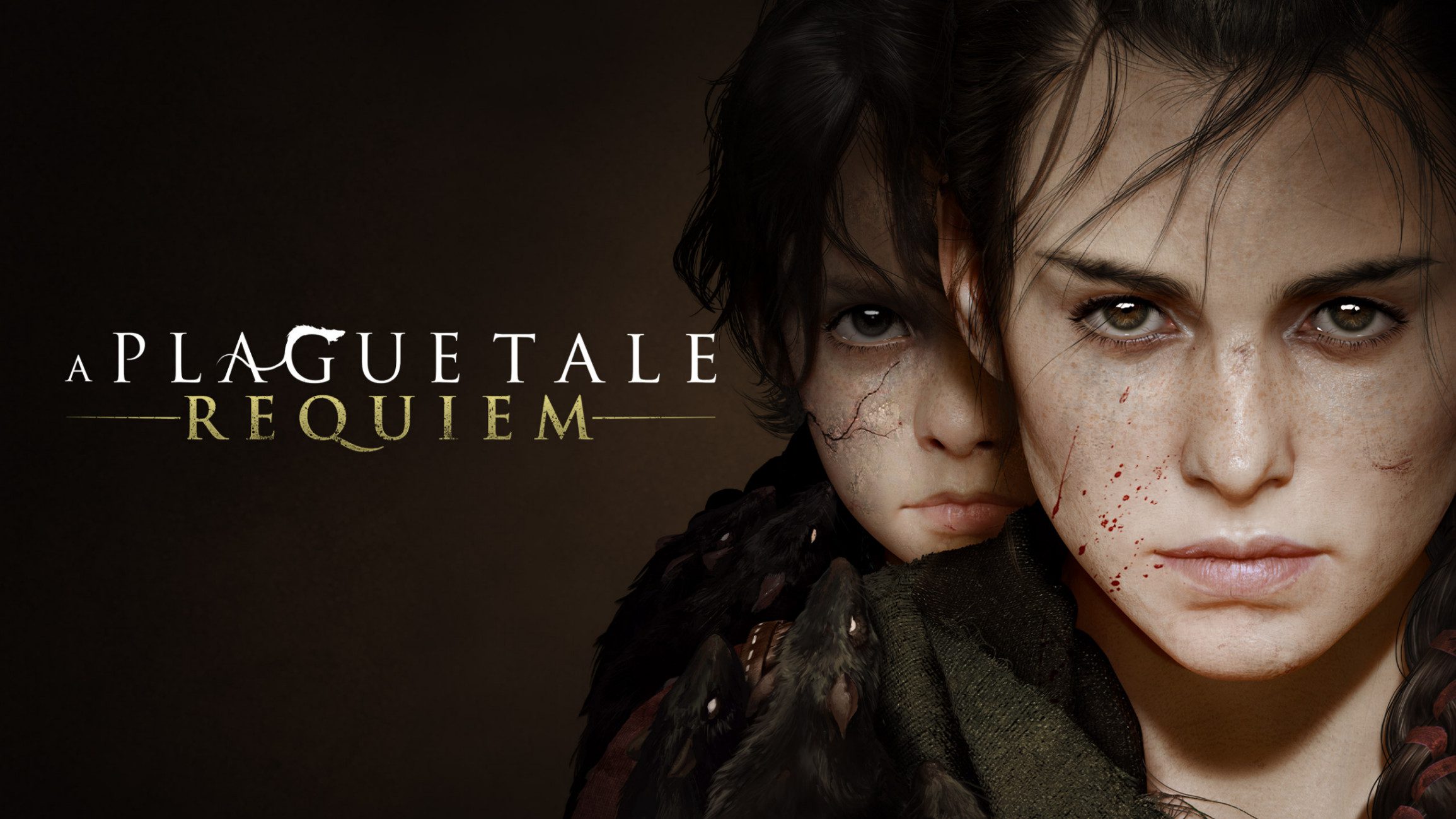
- A Plague Tale: Requiem continues the dark and emotional story of siblings Amicia and Hugo, developed by Asobo Studio and published by Focus Entertainment.
- The game masterfully blends historical fiction with terrifying supernatural forces, creating a tense, narrative-driven experience.
- Gameplay is expanded with more combat options, larger environments, and new ways to control the devastating rat plague.
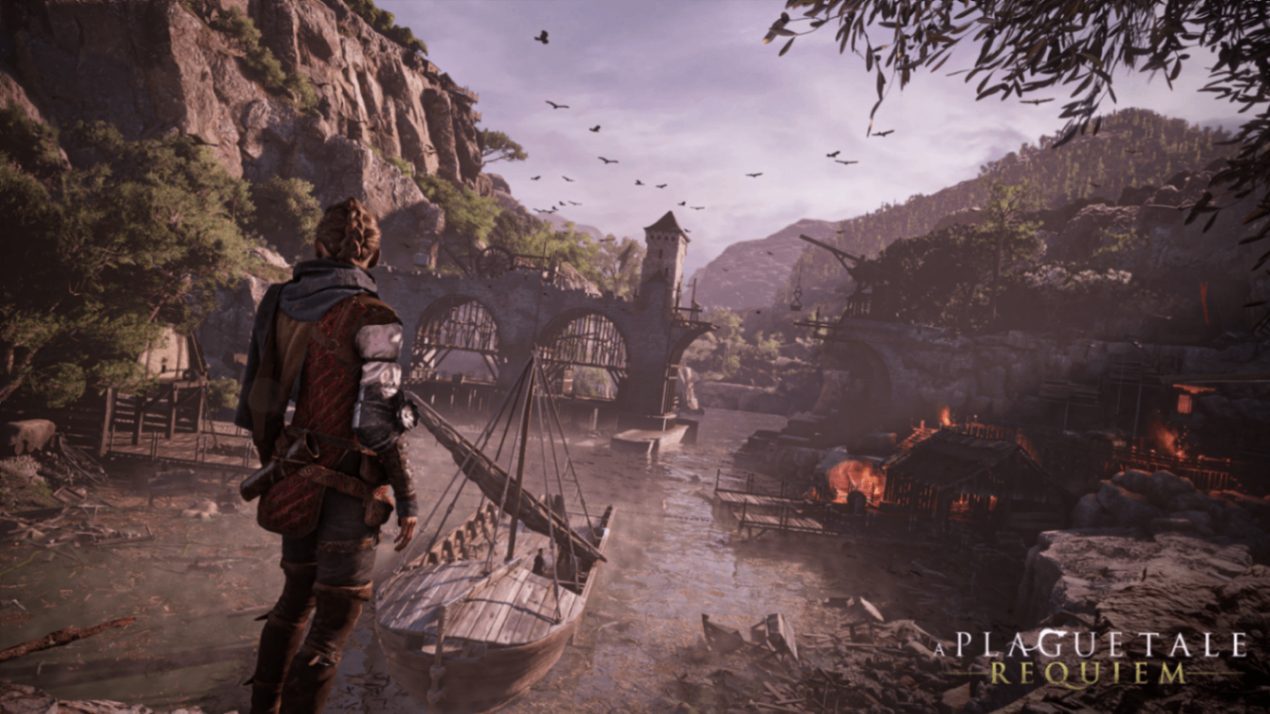
- Stunningly beautiful on platforms like the Xbox Series X, the visuals offer a stark contrast to the grim reality of the story.
- Requiem is a day-one release on Xbox Game Pass, making it easily accessible for subscribers.
Introduction
Welcome to the heart-wrenching world of A Plague Tale: Requiem. This sequel to the critically acclaimed A Plague Tale: Innocence isn’t just another video game; it’s a deep, emotional journey into darkness, loss, and the desperate bonds of family. Picking up months after the first game, Requiem throws you back into the rat-infested, war-torn landscape of 14th-century France. Prepare yourself for a spectacular grounded tale that is as beautiful as it is brutal, pushing its characters and you, the player, to the absolute limit.
The Legacy of the Plague Tale Series
The Plague Tale series burst onto the scene with a unique and harrowing vision of medieval France. The first game, Innocence, introduced us to the de Rune siblings and their struggle against both human cruelty and the unearthly powers of the Macula. It was a story of survival that captivated players.
Requiem takes everything the original game established and elevates it. The world is bigger, the stakes are higher, and the emotional toll is heavier. While Innocence was about escape, Requiem is a desperate search for a cure, expanding on the gameplay and narrative in every way. The next sections will explore this evolution in more detail.
Introduction to A Plague Tale: Innocence
The journey began in A Plague Tale: Innocence, the original game that set the stage for this epic saga. You are introduced to Amicia and Hugo de Rune, children of nobility whose lives are shattered when the Inquisition invades their home, murders their father, and forces them to flee. This is no ordinary flight; their world is being consumed by the Black Death, represented by terrifying, flesh-eating swarms of rats.
The first game is a spectacular grounded tale of survival. As Amicia, you must protect your young, sickly brother Hugo, who you barely know. You learn to navigate a world filled with hostile soldiers and ravenous rat hordes, using stealth, your trusty sling, and light to survive. It’s a tense, linear adventure that forces you to confront the horrors of this dark historical period.
This initial chapter establishes the core conflict: the bond between Amicia and Hugo, the threat of the Inquisition, and the mysterious illness afflicting Hugo, known as the Prima Macula, which is intrinsically linked to the rat plague.
Evolution into A Plague Tale: Requiem
A Plague Tale: Requiem picks up six months later, but any hope for peace is quickly extinguished. The destruction returns as Hugo’s powers, tied to the Macula, resurface with devastating consequences. The family’s desperate struggle for a cure begins anew, pushing them to their breaking point.
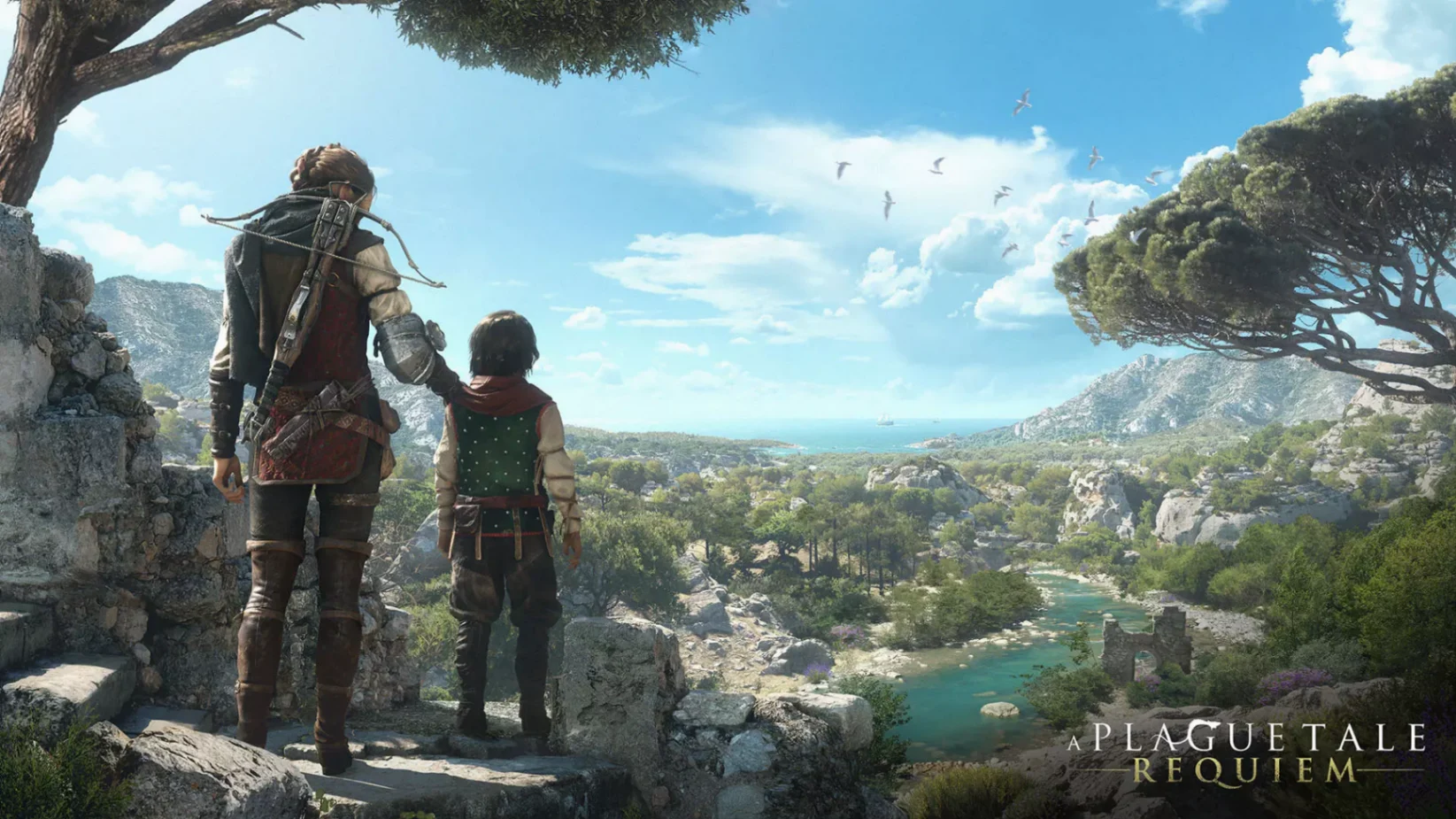
This sequel sees a significant shift in scope. The journey involves a Hugo travel plan based on a recurring dream of a mysterious island that he believes holds the key to his cure. This takes the siblings far from their homeland into new, breathtaking, and equally dangerous regions of southern France. The environments are larger and more open, offering greater freedom in how you approach challenges.
Most importantly, Hugo’s powers have evolved. He can now directly control the rat swarms, a terrifying ability that becomes a central gameplay mechanic. This evolution marks a darker turn for the characters, as using these powers takes a heavy toll on Hugo’s mind and body, making their journey even more perilous.
Storyline and World-Building
The story of A Plague Tale: Requiem is a heartrending journey that will stick with you long after the credits roll. Amicia and Hugo, along with their mother Beatrice and the young alchemist Lucas, seek a cure for Hugo’s curse. This quest leads them south to new regions, from vibrant cities to a mysterious, sun-soaked island, in a desperate search for a new life free from the plague.
However, this breathtaking world is a facade. Beneath the beauty lies a dark history and an even darker future. The narrative explores themes of loss, grief, and the moral compromises made in the name of love. As you’ll discover, the characters’ hope for peace is constantly challenged by the brutal realities of their world.
Main Characters and Their Journey
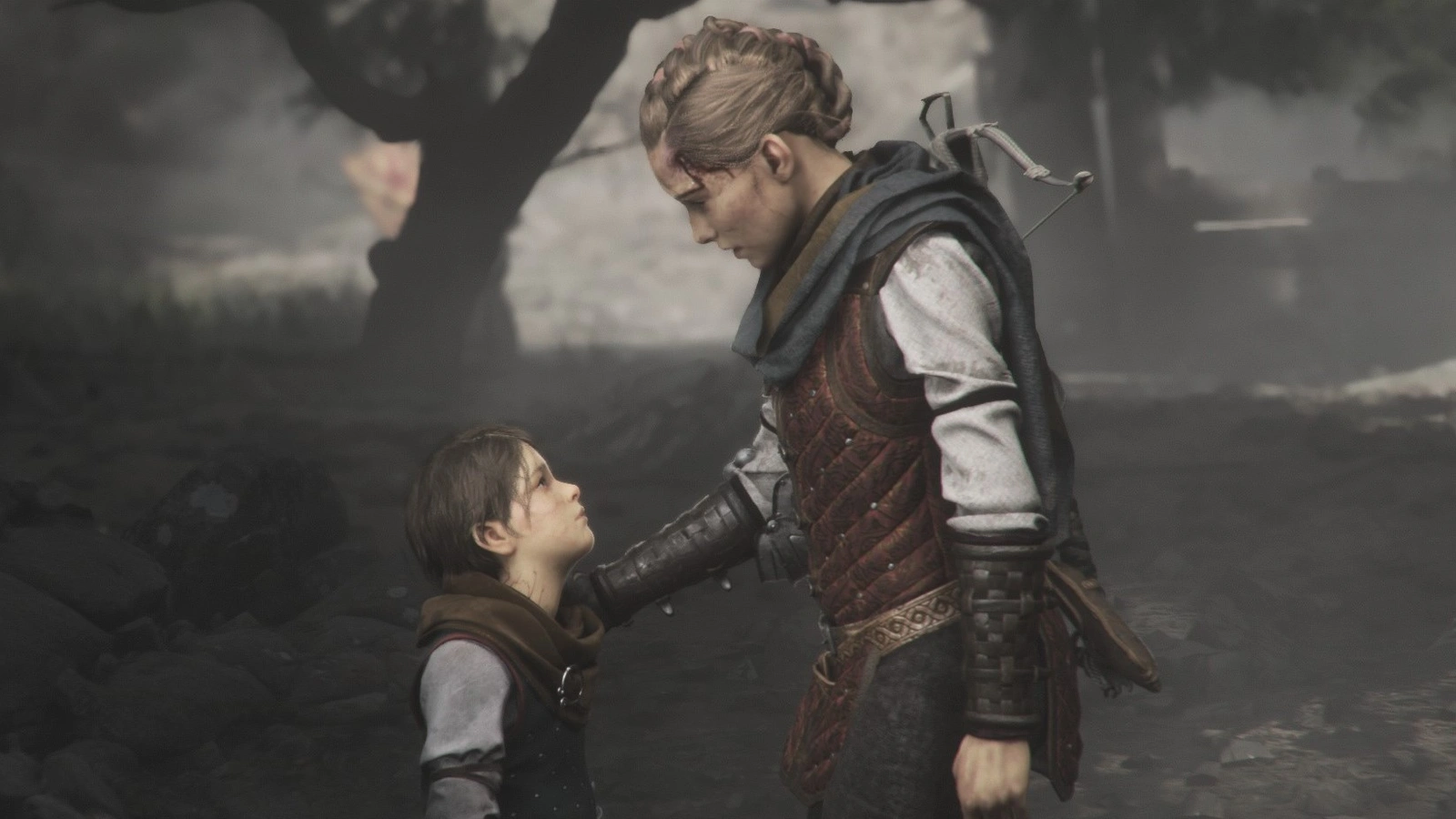
At the core of this Plague Tale is the relationship between its two protagonists, Amicia and Hugo de Rune. Their desperate struggle is brought to life by phenomenal voice actors, with Charlotte McBurney delivering a powerful and raw performance as a traumatized Amicia.
Their journey is a downward spiral fueled by Hugo’s curse, the Prima Macula. As his condition worsens, Amicia is pushed to become more violent and ruthless to protect him. This creates a tragic feedback loop: her violence distresses Hugo, which in turn strengthens the Macula’s hold on him. You will guide them through:
- A search for a mysterious island from Hugo’s dreams.
- Confrontations with soldiers, slavers, and a dangerous pagan cult.
- The devastating realization that Hugo’s curse may not have a cure.
The game forces you to witness their innocence crumble under the weight of their world. It’s a beautifully told, but deeply tragic, character study of two children forced to endure the unthinkable.
Setting, Atmosphere, and Historical Inspirations
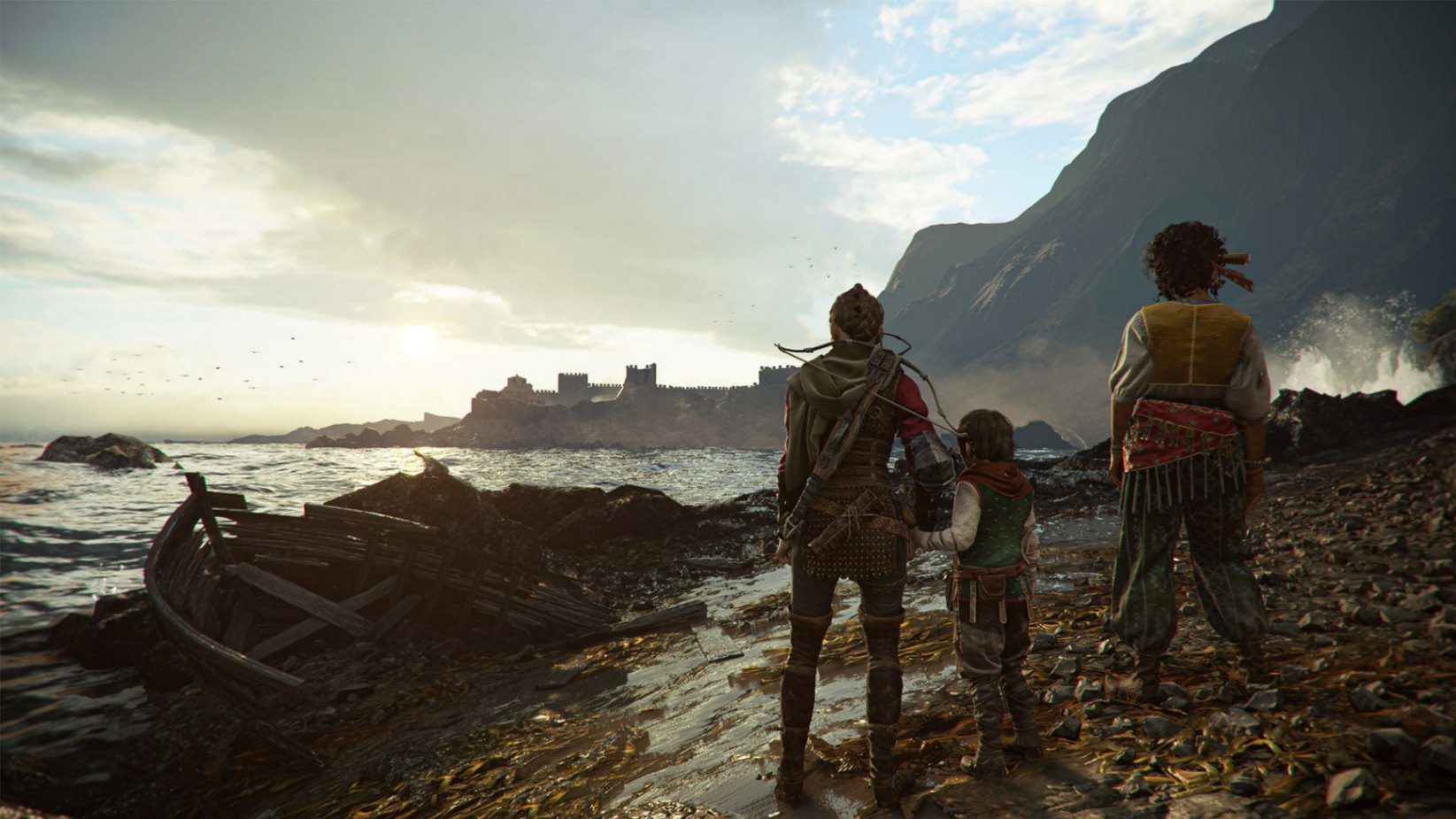
A Plague Tale: Requiem paints a masterful and haunting picture of 14th-century medieval France. The game’s setting moves from the war-torn landscapes of the first game to the seemingly idyllic region of Provence. You’ll explore bustling marketplaces, colorful fields, and beautiful shorelines, creating a stunning visual contrast to the darkness that follows you.
This beauty is a thin veil over the grim reality of the Black Death. The game doesn’t just use history as a backdrop; it twists it by blending it with supernatural forces. The rat swarms are not just a symptom of the plague but a physical manifestation of the Macula’s power—a force of nature that can level cities and reshape the very land.
This combination of historical accuracy and fantastical horror creates a unique and oppressive atmosphere. The vibrant cities and lush countryside make the moments when the plague erupts even more terrifying, reminding you that there is no true sanctuary from the encroaching darkness.
Core Gameplay Mechanics and Innovations
A Plague Tale: Requiem builds upon the solid foundation of its predecessor by significantly expanding your gameplay options. As Amicia, you are no longer just surviving; you are actively fighting back with a greater variety of weapons and tools. The core loop still revolves around stealth, puzzle-solving, and managing the ever-present threat of the rats.
However, the bigger environments and new abilities give you more agency in how you tackle each scenario. Do you sneak past guards, or do you use alchemy and your new crossbow to clear a path? The choice is yours, and the game adapts to your playstyle. The following sections explore these mechanics in greater depth.
Stealth, Puzzles, and Combat Elements
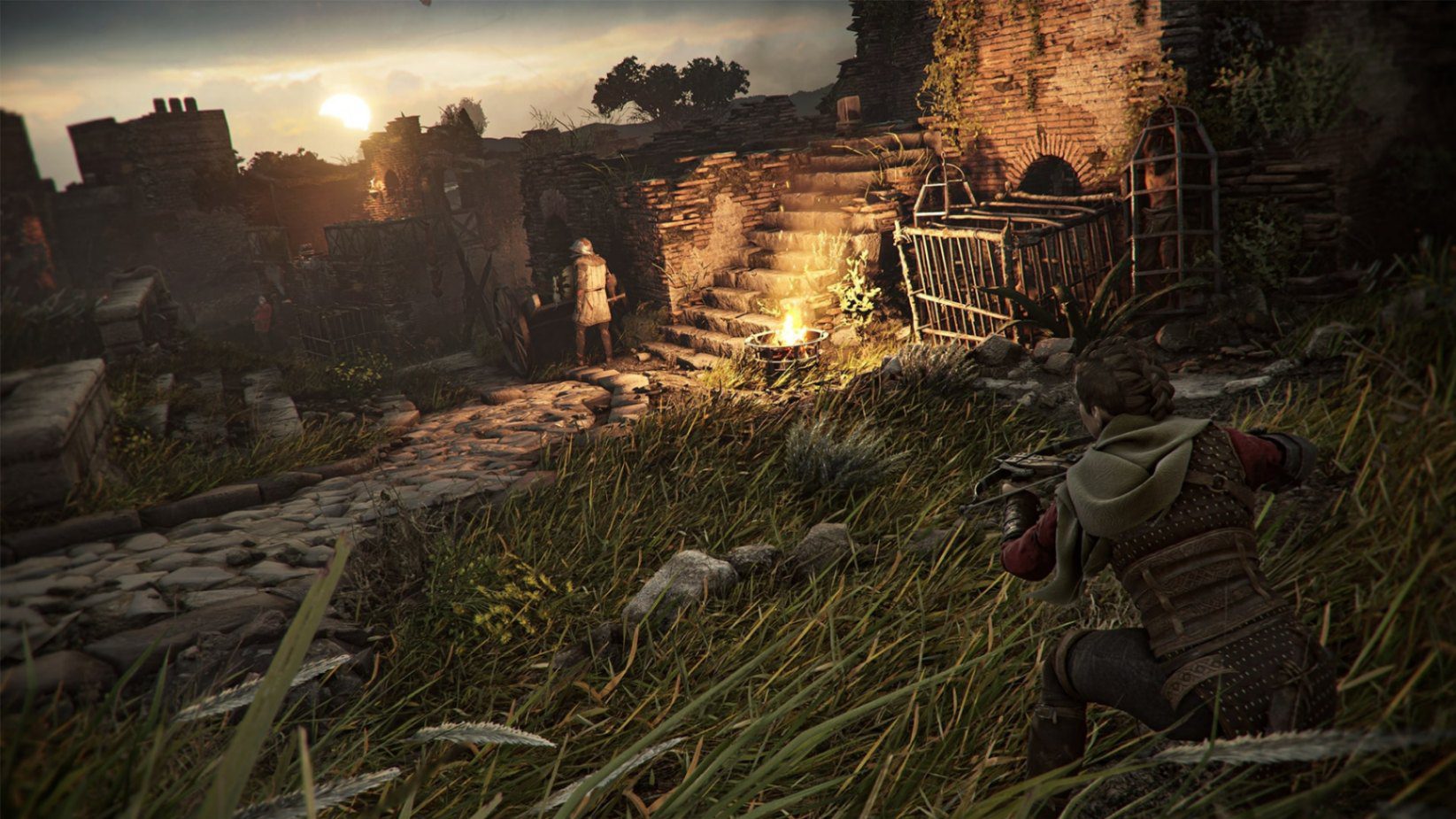
The gameplay of A Plague Tale: Requiem is a tense trifecta of stealth, puzzles, and combat. Stealth remains a key component, but it’s more forgiving. If discovered, you can now break line of sight and return to hiding, offering more flexibility than the instant-fail scenarios of the first game.
Puzzles are intelligently woven into the environment and often involve manipulating light and the rat swarms. You’ll use a variety of tools and alchemical concoctions to create safe paths, distract enemies, and navigate the world. These environmental puzzles are larger and more complex, fitting the expanded scale of the game.
Combat is where Amicia has grown the most. While still vulnerable, she is far more capable and lethal. Your arsenal now includes:
- A crossbow: Perfect for taking down armored enemies from a distance.
- A knife: A last-resort tool for close-quarters self-defense.
- Expanded alchemy: New recipes like Tar can be combined with your sling or pots to ignite larger areas or stick to enemies.
New Features Introduced in Requiem
One of the biggest changes in A Plague Tale: Requiem is the introduction of several new features that deepen the gameplay. The expanded variety of weapons is immediately noticeable, with the crossbow adding a much-needed punch to Amicia’s arsenal.
The most significant new feature, however, revolves around Hugo’s powers. You can now actively command the rat horde to overwhelm your enemies. This power is not without consequence, as overusing it will distress Hugo and have narrative repercussions. Other key new features include:
- Echo Ability: Hugo can use this skill to sense enemies through walls, giving you a tactical advantage in stealth sections.
- New Alchemical Recipes: Tar can be used to amplify fire sources or create flammable surfaces, adding another layer to puzzles and combat.
- Skills Progression: The game tracks your playstyle and unlocks new skills in three categories (Prudence, Aggressive, Opportunism), rewarding you for your preferred approach.
These additions make for a more dynamic and player-driven experience compared to the first game.
Technical Aspects and Platform Differences
A Plague Tale: Requiem is a true next-generation experience, available on PS5, Xbox Series X|S, and PC. It also comes to the Nintendo Switch via a cloud version, allowing players on the hybrid console to stream the game. The power of modern hardware is on full display, with breathtaking visuals and the ability to render up to 300,000 rats on screen at once.
As with most multiplatform releases, there are some technical differences between the versions. While all platforms deliver a visually stunning game, the performance and fidelity can vary. The next section breaks down how the game performs across PS5, Xbox, and PC.
Graphics, Audio, and Performance Across PS5, Xbox, and PC
Visually, A Plague Tale: Requiem is a masterpiece. The graphics are stunning, with incredible lighting, detailed environments, and character models that convey a huge range of emotions. The audio design is equally impressive, from Olivier Derivière’s haunting musical score to the unsettling chittering of thousands of rats.
On the performance side, the experience varies by platform. The PC version offers the most customization, with support for higher frame rates and graphical settings for those with powerful hardware. The PS5 and Xbox Series X versions offer a beautiful and stable experience, though they are often locked to lower frame rates to maintain visual fidelity.
Here’s a general comparison of what you can expect:
|
Platform |
Typical Resolution/Framerate |
Notes |
|---|---|---|
|
PC |
Variable (Up to 4K/60fps+ with high-end hardware) |
Offers the most graphical options and potential for best performance. |
|
PS5 |
Dynamic Resolution targeting 1440p, often at 30-40fps. |
Supports DualSense haptic feedback for greater immersion. |
|
Xbox Series X |
Dynamic Resolution targeting 1440p, often at 30-40fps. |
Similar performance to PS5, with gorgeous visuals. |
|
Xbox Series S |
Targets 1080p resolution at 30fps. |
A solid experience, though with reduced visual fidelity. |
Accessibility and User Experience Enhancements
Asobo Studio has made conscious efforts to improve the user experience and accessibility in Requiem. The game includes a range of options that allow you to tailor the experience to your needs, which is a welcome addition for a challenging game like this.
These features go beyond simple difficulty settings. You can adjust various aspects of the gameplay to reduce frustration and make the journey more manageable. This ensures that more players can experience the powerful story without being stonewalled by difficult sections. Some of the key enhancements include:
- Invincibility Mode: An option to prevent Amicia from dying, allowing players to focus solely on the narrative.
- Adjustable enemy and rat behavior: You can tweak how aware enemies are and how aggressive the rats behave.
- UI and subtitle customization: Options to change the size and background of text for better readability.
These accessibility features demonstrate a thoughtful approach to game design, ensuring that this incredible story can be enjoyed by the widest possible audience.
Developer Insights and Creative Vision
The haunting world of A Plague Tale comes from the brilliant minds at Asobo Studio, with publishing support from Focus Entertainment. Their creative vision was to craft a narrative-driven game that wasn’t afraid to explore dark themes, anchored by a powerful story of sibling love and survival against impossible odds.
With Requiem, Asobo Studio aimed to create a bigger, more emotional, and more visually spectacular sequel. They pushed the boundaries of their technology to bring the rat plague to life in a truly terrifying way while doubling down on the character-focused storytelling that made the first game a hit.
Meet Asobo Studio – The Developers Behind the Game
Asobo Studio, the developer behind the Plague Tale series, is a French game studio based in Bordeaux. Founded in 2002, they have a long history of working on a variety of projects, but it was A Plague Tale: Innocence that truly put them on the map as creators of powerful, single-player narrative experiences.
In partnership with publisher Focus Entertainment, Asobo has demonstrated a remarkable talent for blending compelling storytelling with innovative gameplay and stunning art direction. Their work on this series shows a deep understanding of how to create atmosphere and emotional weight.
The team’s dedication is evident in every frame of Requiem. From the historical research that informs the world to the technical prowess needed to render hundreds of thousands of rats, Asobo Studio has poured its heart into this project, solidifying its reputation as a top-tier developer.
Notable Contributions from the Art and Writing Teams
The incredible impact of A Plague Tale: Requiem is a direct result of the phenomenal work from its art and writing teams. The artists have crafted a world that is breathtakingly beautiful yet deeply unsettling. The contrast between sun-drenched lavender fields and the putrid, rat-infested pits of death creates a powerful visual narrative that mirrors the game’s themes of hope and despair.
The writing team, led by Sébastien Renard, has penned a story that is both epic in scope and deeply personal. The dialogue is sharp, and the character arcs are heartbreakingly real. They aren’t afraid to push Amicia and Hugo into uncomfortable territory, exploring the psychological toll of their journey with nuance and maturity.
This is all brought to life by the stellar voice actors. Charlotte McBurney (Amicia) and Logan Hannan (Hugo) deliver performances that are raw, emotional, and utterly convincing. Their work is the beating heart of the game, making the de Runes’ struggle feel painfully real.
Reception and Critical Response
Upon its release, A Plague Tale: Requiem received a largely positive critical response. Many critics praised it as a worthy successor that improved upon the original in nearly every aspect. The game’s powerful narrative, stunning visuals, and emotional depth were frequently highlighted in reviews.
The game’s strong reception was also reflected during awards season, where it earned multiple nominations, including for the coveted Game of the Year at The Game Awards 2022. This acclaim cemented the series as a standout in the action-adventure genre. The following sections explore both the praise and the criticisms in more detail.
Review Highlights and Praise
Critics showered A Plague Tale: Requiem with praise for its ambition and emotional storytelling. The game was lauded for being a “beautiful and expansive sequel” that successfully concludes Amicia and Hugo’s story. Many reviews pointed to the game as a high point for narrative-driven adventures.
The visual and technical achievements were another common point of praise. The gorgeous yet grim world, brought to life by Asobo’s engine, was seen as a major accomplishment. The sheer scale of the rat swarms was frequently mentioned as a terrifying and impressive technical feat.
Key highlights from positive reviews often included:
- A gripping and emotional narrative: The story of Amicia and Hugo’s descent was called powerful and heartbreaking.
- Stunning graphics and art direction: The world was described as one of the most beautiful and haunting in modern gaming.
- Phenomenal voice acting: The performances, especially from Charlotte McBurney, were celebrated for their emotional depth.
Common Criticisms and Community Feedback
Despite the widespread praise, A Plague Tale: Requiem was not without its criticisms. One of the most common points of contention was the game’s relentlessly bleak and hopeless tone. Some players and critics found the story to be an “exhausting, miserable exploration of loss and grief,” where moments of respite only serve to set up more suffering.
This despairing narrative culminates in an ending that some felt was nihilistic. The game’s message—that Amicia’s fight was ultimately pointless and that she must accept the grim solution proposed by her enemies—was seen by some as a “bitter, hopeless message.”
Common criticisms from the community and reviews included:
- Overwhelmingly bleak narrative: Some felt the story lacked hope and was emotionally draining.
- Frustrating gameplay sections: Certain combat and stealth encounters were criticized for feeling clunky or unfair.
- A controversial ending: The final act and its message did not resonate with all players, with some finding it unsatisfying.
Purchasing and Availability
Ready to embark on this harrowing journey? A Plague Tale: Requiem, published by Focus Entertainment, is widely available for purchase on digital storefronts for PC, PlayStation 5, and Xbox Series X|S. This makes it easy to dive into Amicia and Hugo’s latest chapter no matter your preferred platform.
Perhaps the best news for Xbox players is that A Plague Tale: Requiem launched as a day-one title on Xbox Game Pass. If you’re a subscriber to the service, you can download and play the full game on console, PC, or via the cloud at no extra cost.
Where to Buy A Plague Tale: Requiem Online
You can easily find and purchase a digital copy of A Plague Tale: Requiem from the official online store for your platform of choice. This is the most direct way to get the game and start playing immediately after it downloads.
For console players, the process is straightforward. Simply head to the digital marketplace on your PlayStation or Xbox, search for the game, and complete your purchase. PC players have a few different options, as the game is available on multiple popular storefronts.
Here’s where you can buy the game online:
- PlayStation Store: For PS5 users.
- Microsoft Store: For Xbox Series X|S and PC users. Also available via Xbox Game Pass.
- Steam & Epic Games Store: For PC players looking for different launchers.
- Nintendo eShop: For the Cloud Version on Nintendo Switch.
Game Editions and Pricing Details
When it comes to purchasing A Plague Tale: Requiem, the process is refreshingly simple. The game was primarily released as a standard edition, meaning you get the full, incredible story without needing to worry about multiple confusing versions.
The pricing for the game is typical for a major new release, generally launching around $59.99 USD on consoles and PC. However, prices can vary depending on the storefront, region, and any sales or promotions that may be active. It’s always a good idea to check the current price on your preferred platform.
Key points on editions and pricing:
- Standard Edition: The main version of the game, which includes the complete single-player experience.
- Launch Price: Typically around $59.99 USD, but subject to change.
- Xbox Game Pass: Available at no additional cost for subscribers, offering the best value for many players.
Conclusion
In conclusion, “A Plague Tale: Requiem” delves deep into the emotional and harrowing journey of its characters, offering players an immersive experience that blends stunning visuals with a gripping narrative. As you navigate through its beautifully crafted world filled with challenges, the game invites an exploration of themes such as family, sacrifice, and resilience. The enhancements in gameplay mechanics and the developers’ vision contribute to a memorable sequel that stands on its own while honoring its predecessor.
Frequently Asked Questions
How long does it take to complete A Plague Tale: Requiem?
The completion time for A Plague Tale: Requiem is around 15-20 hours for most players. This can vary depending on your playstyle and how much time you spend exploring. This makes for a substantial video game experience, giving the heartrending journey ample time to unfold.
Do you need to play Innocence before Requiem?
Yes, it is highly recommended that you play A Plague Tale: Innocence before starting Requiem. As one of the most compelling narrative-driven games available, Requiem is a direct sequel, and its emotional impact relies heavily on your connection to the characters and events from the original game.
Is A Plague Tale: Requiem worth it for fans of story-driven games?
Absolutely. A Plague Tale: Requiem is a pinnacle of modern story-driven games. Asobo Studio’s creative vision delivers a spectacular grounded tale with an incredible narrative, deep characters, and powerful emotional moments. If you love games that prioritize story, this is an essential experience you shouldn’t miss.